
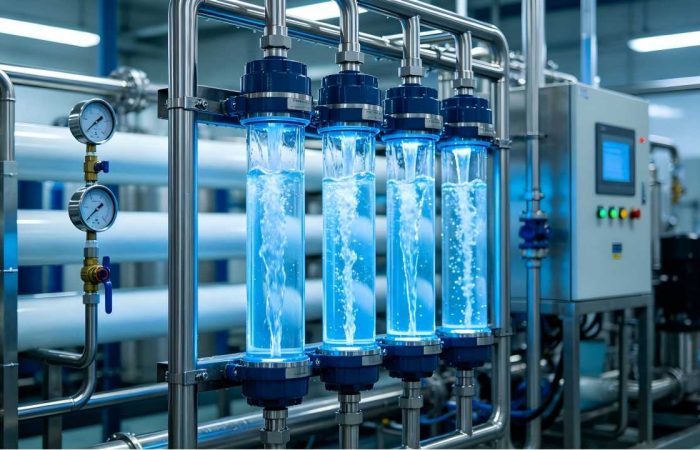
Clean water is no longer just an environmental goal—it is becoming a critical operational advantage. As industrial processes grow more sophisticated, water resources become increasingly scarce, and pollution control regulations turn stricter, high-flow filter cartridges have evolved from auxiliary components into core assets in modern water treatment systems. They directly determine water quality stability, overall system efficiency, maintenance frequency, and the comprehensive cost of water resource recycling. For industrial engineers, facility managers, and environmental technology practitioners, mastering the methods to maintain and optimize filter cartridge performance is not merely a technical skill, but a vital strategy to achieve stable, cost-effective, and sustainable water treatment operations.
With the continuous advancement of industrial technology and the worsening complexity of water pollution scenarios, high-flow filter cartridges have become indispensable and efficient equipment for industrial and municipal water purification. They play a pivotal role in promoting water resource recycling, alleviating water environmental pollution, and improving overall ecological conditions. To maximize the inherent performance advantages of high-flow filter cartridges and extend their service life, it is essential to thoroughly explore and understand the core factors that affect their long-term operational stability and filtration capacity.
High-flow filter cartridges are widely deployed in fluid filtration systems due to their high contaminant interception efficiency and reliable operational stability, which effectively control the impurity concentration of working media. Among all influential parameters, system pressure differential (ΔP) fluctuation is the most intuitive indicator reflecting the filter’s operating status and remaining lifespan. During continuous operation, the interception of suspended solids and impurities inevitably triggers minor pressure differential changes across the filter medium. When such fluctuations remain within the manufacturer’s rated tolerance range, they only cause predictable and normal mechanical wear, without leading to structural damage or functional failure of the filter cartridge.
Beyond pressure differential dynamics, the overall service cycle of high-flow filter cartridges is greatly affected by daily operational behaviors and on-site working conditions, mainly including equipment start-stop frequency, ambient operating environment, and system operating load. Frequent startup and shutdown will generate instantaneous water hammer effect and intense flow impact on the filter medium, accelerating fiber fatigue and material aging. Long-term unstable operating states and overloaded operation will further aggravate progressive performance degradation of the filter cartridge.
Harsh operating environments with high pollutant concentrations, extreme temperature fluctuations, or corrosive fluid properties will significantly accelerate surface contamination and internal clogging of filter cartridges. Sustained overloaded operation leads to rapid accumulation of particulate impurities on the filter surface, resulting in gradual flux attenuation, continuous rise of system pressure differential, and substantial shortening of effective service life.
Each high-flow filter cartridge is manufactured with standardized rated pressure and maximum load thresholds, and operation exceeding these defined parameters will severely compromise filtration performance and structural durability. System flow rate and liquid viscosity are two critical fluid physical properties that dominate filter service life. Excessive flow velocity produces continuous shear stress on the filter medium, which may cause microstructural deformation and weaken impurity retention capability. In addition, high liquid viscosity hinders fluid permeation, accelerates surface fouling and filter cake layer formation, and ultimately shortens the effective operating cycle of the cartridge.
In summary, the lifespan and functional stability of high-flow filter cartridges are jointly determined by four core factors: system pressure differential variation, daily equipment operation habits, on-site ambient conditions, and fluid medium physical properties. A comprehensive grasp of these influencing factors enables enterprises to formulate standardized operating specifications and refined maintenance schemes. This scientific management mode effectively stabilizes water treatment efficiency, avoids premature filter replacement caused by irregular operation, reduces overall operation and maintenance costs, and guarantees the long-term stable and sustainable operation of water treatment systems.
Many industrial and municipal water treatment facilities are plagued by high operating costs, frequent system clogging, unstable effluent quality, and early filter failure. In most cases, these problems stem from non-standard operational practices and unscientific daily maintenance of high-flow filter cartridges.
Optimizing filter operation strategies and standardizing parameter control is one of the most cost-effective ways to stabilize water treatment system performance and reduce long-term operational expenditures.
💡 What is your biggest pain point in the daily operation and maintenance of high-flow filter cartridges? Feel free to share your practical experience in the comment section. You can also send me a private message to get professional customized filtration solutions and standardized maintenance guidelines tailored to your water treatment projects.
#HighFlowFilter #WaterTreatment #IndustrialFiltration #FluidFiltration #WaterConservation